

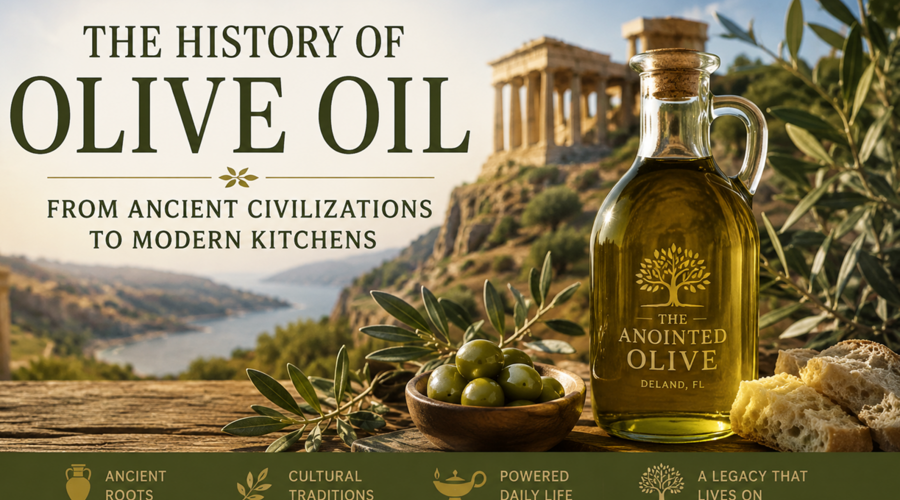
The History of Olive Oil: From Ancient Civilizations to Modern Kitchens
At The Anointed Olive, we spend a lot of time talking about flavor. We discuss harvests, tasting notes, pairings, and the remarkable differences between oils from various regions of the world. But every now and then, it is worth taking a step back and appreciating just how extraordinary olive oil really is. Long before it was drizzled over artisan bread, splashed onto salads, or paired with balsamic vinegar at dinner parties or enhancing fancy meals in Deland and Ormond Beach, olive oil was helping shape civilization itself.
That may sound like a bold claim, but olive oil has been influencing human history for thousands of years. Entire economies were built around it. Empires traded it. Religious leaders used it in sacred ceremonies. Physicians prescribed it. Families cooked with it. And somehow, after all these centuries, it still holds a place of honor in kitchens around the world.
The story begins in the Mediterranean thousands of years ago. Archaeologists believe olive trees were first cultivated between 6,000 and 8,000 years ago in regions surrounding modern-day Turkey, Greece, and the Levant. What started as a wild fruit eventually became one of the most valuable agricultural products in the ancient world.
The ancient Egyptians prized olive oil enough to place it in tombs alongside treasured possessions. The Minoans of Crete used it in religious ceremonies and trade. Later, the Greeks elevated the olive tree to near-mythical status. According to legend, the city of Athens was named after the goddess Athena because her gift of an olive tree was considered more valuable than Poseidon's gift of a saltwater spring.
It's a tough loss for Poseidon, but to be fair, you can't saute vegetables in a saltwater spring.
As Greek influence spread throughout the Mediterranean, so did olive oil. The Romans took things even further. They developed large-scale production methods, expanded trade routes, and transported olive oil across Europe, North Africa, and the Middle East. Large clay vessels called amphorae carried olive oil across the seas much like cargo containers transport goods today.
In many places, olive oil was far more than food. It was wealth, commerce, and a symbol of prosperity. Its importance extended far beyond the kitchen.
Ancient athletes rubbed olive oil on their skin before competitions. Physicians incorporated it into medicinal remedies. Religious leaders used it for blessings, anointing ceremonies, and sacred rituals. Olive oil became deeply woven into Jewish, Christian, and later Islamic traditions. It symbolized healing, purity, peace, and abundance.
Even today, the olive branch remains one of the most recognized symbols of peace in the world.
For centuries, olive oil also helped light the darkness. Before electricity, lamps fueled by olive oil illuminated homes, temples, churches, and public spaces. Imagine explaining to an ancient Roman that one day people would use olive oil while debating which streaming service they should cancel this month.
Somehow that conversation feels equally confusing for both parties.
As generations passed, olive oil became inseparable from Mediterranean culture. Families harvested olives together. Recipes were passed from one generation to the next. Entire communities were built around the annual harvest season. Regional varieties developed distinct flavors and characteristics that reflected the land where they were grown.
The olive tree itself became a symbol of endurance and resilience. Some olive trees have lived for hundreds of years. A few are believed to be more than a thousand years old. They survive droughts, storms, and changing civilizations while continuing to produce fruit year after year. There sure is something inspiring about that kind of longevity. (We on the other hand have been in business since 2017, but hey we are catching up!)
There sure is something inspiring about that kind of longevity.
Today, olive oil remains one of the defining ingredients of Mediterranean cuisine. While modern production has become more sophisticated, the basic process remains remarkably similar to what ancient civilizations practiced thousands of years ago: carefully harvest olives, extract their oil, and preserve the flavors nature provides.
At The Anointed Olive, that connection to history is part of what we love most. Everything we do represents a tradition that stretches back through generations of farmers, families, and cultures that understood the value of this remarkable fruit.
We are passionate about bringing fresh Ultra Premium olive oils and authentic balsamic vinegars to our customers, not just because they taste incredible, but because they carry a story. Olive oil isn't simply an ingredient. It has fueled economies, inspired legends, illuminated homes, healed wounds, and brought families together around the dinner table for thousands of years.
One of the things we enjoy most is helping people discover that olive oil is not a single flavor. Just like coffee, wine, or tea, every harvest and every region offers something unique. Some oils are bright and peppery. Others are buttery and mild. Exploring those differences is part of the adventure. The next time you drizzle olive oil over vegetables, finish a favorite dish, or dip a piece of fresh bread into a bowl of extra virgin olive oil, remember that you are participating in one of the oldest culinary traditions in human history.
Not bad for a fruit that spends most of its life hanging from a tree.


Leave a comment