

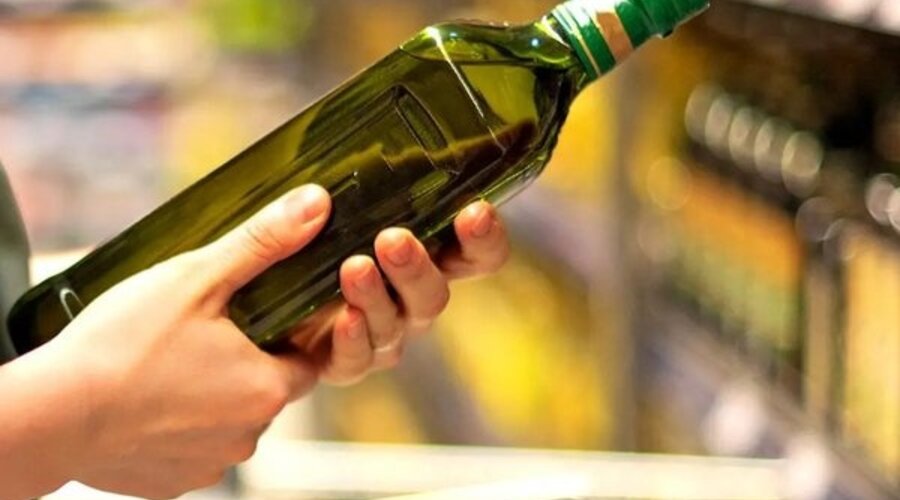
Walk down the olive oil aisle and you'll encounter an impressive collection of words:
Extra Virgin. Virgin. Pure. Light. Premium. Extra Light.
And, in our store, Ultra Premium.
They don't all mean the same thing.
Some are legally defined grades. Others describe products or are primarily marketing terminology. And understanding the difference can make shopping for olive oil much easier.
Extra Virgin Olive Oil
Extra Virgin Olive Oil (EVOO) is a recognized grade of olive oil.
Extra virgin olive oil must be produced from olives using mechanical or other physical means without refining and must meet established chemical and sensory requirements.
Among those requirements, EVOO must have:
- Free Fatty Acidity of no more than 0.8%
- No sensory defects under established testing standards
- Detectable fruitiness
- Chemical measurements that fall within established limits
Extra virgin represents the highest internationally recognized grade of olive oil.
But here's where things become important:
Meeting the minimum requirements for Extra Virgin doesn't mean every EVOO is equal.
There can be enormous differences in freshness, chemistry, fruit quality, storage and sensory characteristics among oils that technically qualify as Extra Virgin.
Virgin Olive Oil
Virgin olive oil is also produced mechanically without refining, but it is permitted to have higher acidity and some sensory defects.
It is therefore a lower grade than Extra Virgin.
This is one reason the word “virgin” by itself shouldn't be confused with “extra virgin.”
What Does Plain “Olive Oil” Mean?
This one surprises many people.
A bottle simply labeled Olive Oil is generally not Extra Virgin Olive Oil.
It is typically a combination of refined olive oil and virgin olive oil.
Refining removes defects from lower-quality oil but also removes much of the flavor, aroma and naturally occurring minor compounds associated with virgin olive oils.
A small amount of virgin olive oil may then be blended back into the refined oil.
What Is “Pure Olive Oil”?
“Pure” certainly sounds as though it should be superior.
It isn't a higher olive oil grade.
Products marketed as Pure Olive Oil are generally refined olive oil blended with virgin olive oil.
The word “pure” doesn't mean it's better than Extra Virgin.
This is a great example of why understanding olive oil terminology matters more than simply choosing the bottle with the most impressive-sounding words.
What About “Light” or “Extra Light” Olive Oil?
Another common misconception is that Light Olive Oil contains fewer calories or less fat.
It doesn't.
“Light” generally refers to its lighter flavor, not its calorie content.
Light-tasting olive oils are highly refined and have much less of the characteristic flavor and aroma associated with Extra Virgin Olive Oil.
So What Is Ultra Premium?
This deserves an important distinction.
Ultra Premium (UP) is not a USDA or International Olive Council grade.
Our oils must first qualify as Extra Virgin Olive Oil.
The Ultra Premium designation refers to an additional voluntary quality standard established by our supplier that goes substantially beyond the minimum requirements necessary to qualify as Extra Virgin.
The UP standard evaluates a broader range of chemistry and imposes stricter limits on measurements including:
- Free Fatty Acids
- Oleic Acid
- Peroxide Value
- UV absorption
- Biophenol content
- DAGs
- PPP
For example, the internationally recognized Extra Virgin limit for Free Fatty Acids is ≤0.8%.
The UP standard requires ≤0.3%.
And while international Extra Virgin standards do not establish a minimum phenolic content, the UP standard requires a minimum.
So Ultra Premium doesn't replace the Extra Virgin designation.
Think of it this way:
Extra Virgin tells you the recognized grade. Ultra Premium tells you about the additional standard we require within that grade.
That's an important distinction.
Why We Show You the Chemistry
This is also why you'll see chemistry information accompanying our EVOOs at The Anointed Olive.
Instead of simply telling you an oil is “premium,” we can show you measurements associated with its quality and condition.
Depending upon the oil, you'll see information such as its:
Biophenols • FFA • Oleic Acid • Peroxide Value • DAGs • PPP
Those numbers allow us to explain why an oil meets our standard rather than relying solely on marketing language.
The Takeaway
When you're comparing olive oils, don't assume the fanciest word on the bottle represents the highest quality.
Start with the actual grade.
Extra Virgin is the highest recognized olive oil grade.
Terms such as Pure and Light don't indicate a higher grade and usually describe products containing refined olive oil.
And Ultra Premium, as we use it, is something different: an additional quality standard applied to Extra Virgin Olive Oil that establishes stricter chemical requirements than the minimum EVOO standard.
Ultimately, the goal isn't to memorize every category of olive oil.
It's to know what you're buying—and why the claims being made about it actually mean something.


Leave a comment