

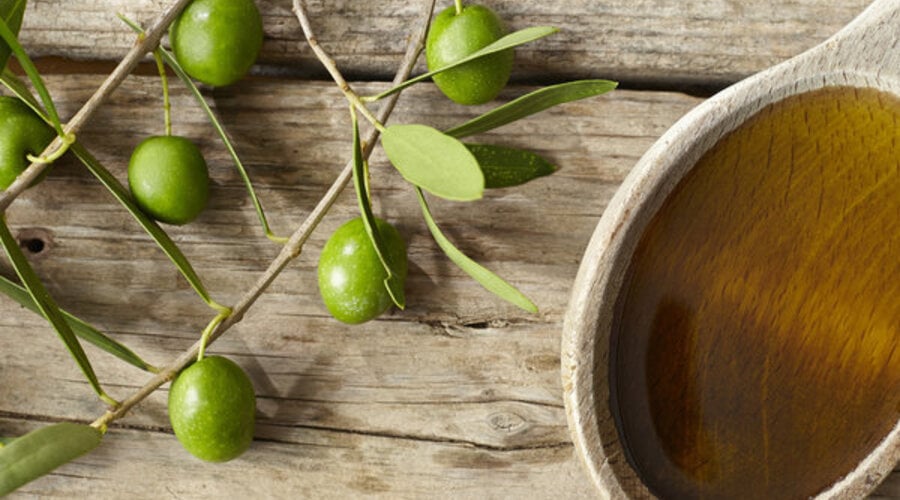
Choosing olive oil instead of certain other fats may be one of the simplest dietary changes you can make—and a large, long-term study suggests that choice could matter.
Researchers from the Harvard T.H. Chan School of Public Health examined olive oil consumption among more than 90,000 U.S. adults followed for nearly three decades.
Published in the Journal of the American College of Cardiology, the study found that people who consumed more olive oil had a lower risk of death overall and from several major causes compared with people who rarely or never consumed olive oil.
Perhaps even more interesting was what researchers found when they looked at replacing other dietary fats with olive oil.
More Than 90,000 People Followed for 28 Years
Researchers analyzed data from two of the country's largest long-running health studies: the Nurses' Health Study and the Health Professionals Follow-Up Study.
The analysis included 60,582 women and 31,801 men who were free of cardiovascular disease and cancer when the study began in 1990.
Participants completed dietary questionnaires every four years, allowing researchers to track changes in olive oil consumption and other dietary habits through 2018.
During the 28-year follow-up period, 36,856 participants died.
Researchers then examined whether olive oil consumption was associated with the participants' risk of death overall and from specific causes.
What Did Researchers Find?
Compared with people who rarely or never consumed olive oil, participants with the highest olive oil consumption had a:
- 19% lower risk of cardiovascular disease mortality
- 17% lower risk of cancer mortality
- 18% lower risk of respiratory disease mortality
- 29% lower risk of neurodegenerative disease mortality
Higher olive oil consumption was also associated with a lower risk of death from all causes.
These are significant associations, but there's an important distinction: the study was observational.
It shows a relationship between olive oil consumption and lower mortality risk, but it does not prove that olive oil itself caused those reductions.
What You Replace May Matter
One of the most useful findings from the study involved substitution.
Researchers estimated what might happen when approximately 10 grams per day of certain fats were replaced with the same amount of olive oil.
Replacing margarine, butter, mayonnaise or dairy fat with olive oil was associated with an 8% to 34% lower risk of total and cause-specific mortality, depending on the type of fat being replaced and the cause of death being examined.
That distinction matters.
The research doesn't simply suggest adding unlimited amounts of olive oil to your existing diet. Instead, it supports the idea of using olive oil in place of certain other sources of dietary fat.
In practical terms, that could mean using olive oil instead of butter when sautéing vegetables, making a vinaigrette rather than reaching for a creamy dressing, or using olive oil in recipes where it can replace other fats.
Why Might Olive Oil Be Different?
Olive oil is naturally high in oleic acid, a monounsaturated fatty acid that has been extensively studied in connection with cardiovascular health.
But with extra virgin olive oil, the story doesn't end with its fatty-acid profile.
EVOO also retains naturally occurring biophenols and other minor compounds from the olive fruit because it is mechanically extracted without refining.
These compounds are of particular interest to researchers because of their antioxidant and anti-inflammatory properties.
Researchers continue to investigate how the combination of oleic acid and these naturally occurring compounds may contribute to the health effects associated with olive oil consumption.
What About Extra Virgin Olive Oil?
There's an important limitation to this particular study.
Researchers were unable to distinguish between different grades of olive oil consumed by participants.
That means the results apply to olive oil consumption generally and cannot tell us whether extra virgin olive oil produced a greater effect than refined olive oil.
That's an important distinction because different grades of olive oil aren't chemically identical.
Extra virgin olive oil retains naturally occurring flavors, aromas, biophenols and other minor compounds that are largely reduced or removed during refining.
So while this study provides compelling evidence surrounding olive oil as a category, it doesn't answer every question about whether the quality or chemistry of the oil makes a difference.
Olive Oil Is Part of the Bigger Picture
The study also doesn't mean that olive oil is a magic ingredient capable of overcoming an otherwise poor diet or unhealthy lifestyle.
People who consume more olive oil may differ from people who don't in many ways. Researchers use statistical methods to account for known differences, but observational research can't eliminate every possible influence.
What this study does provide is another piece of evidence supporting dietary recommendations that favor unsaturated plant-based fats over fats higher in saturated fat.
And olive oil makes that change remarkably easy.
Use it for roasting. Sauté with it. Whisk it into dressings and marinades. Drizzle it over vegetables, soups or finished dishes. Experiment with baking and other recipes where olive oil can replace other fats.
Small substitutions made consistently over time can become meaningful dietary habits.
The Takeaway
After following more than 90,000 American adults for 28 years, researchers found that higher olive oil consumption was associated with a lower risk of death overall and from cardiovascular, cancer, respiratory and neurodegenerative diseases.
Just as importantly, replacing approximately 10 grams per day of butter, margarine, mayonnaise or dairy fat with olive oil was associated with an 8% to 34% lower risk of total and cause-specific mortality.
The study cannot prove that olive oil caused these reductions, and researchers continue to investigate the mechanisms involved.
But its practical message is refreshingly simple:
It's not only about adding olive oil. What you use it to replace may matter, too.
Research Source
Guasch-Ferré M, Li Y, Willett WC, et al. Consumption of Olive Oil and Risk of Total and Cause-Specific Mortality Among U.S. Adults. Journal of the American College of Cardiology. 2022;79(2):101–112.
This article is for educational purposes only and is not intended to diagnose, treat, cure or prevent any disease or replace individualized medical advice.


Leave a comment